
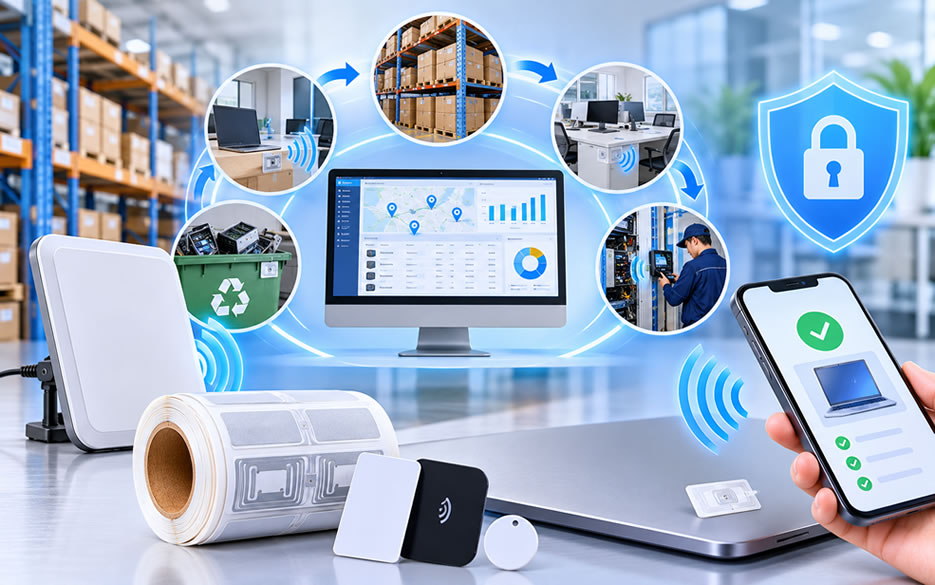
RFID asset management gives every fixed asset a unique electronic ID. Readers, antennas and a central platform support batch inventory, real-time location tracking and full lifecycle control from receipt to disposal. For high-value goods, encrypted NFC labels and tamper-evident security labels add brand protection — consumers can verify authenticity with a smartphone, while every handover in the supply chain leaves a traceable record.
Why RFID for asset control
Fixed assets are spread across departments, server rooms, warehouses and field sites. Manual logs and one-by-one barcode scanning make inventory slow and error-prone. Once equipment is transferred, lent out or retired, the chain of responsibility is hard to reconstruct.
On the brand-protection side, printed codes can be copied and distribution channels are often opaque. RFID and NFC labels bring asset control and product traceability into one item-level data model, so every handover and verification leaves a record.
System components and closed-loop workflow
A typical system consists of tags, readers, antennas and a management platform. The tag acts as a digital ID, readers collect data in batches, and the platform handles analysis and traceability.
- Register and tag: write a unique ID and link it to asset name, model, batch, department or production data to create the initial record.
- Receiving and issue: read tags in batches at goods receipt, shelving and issuance, recording time, quantity and responsible person automatically.
- Transfer and movement: portals or in-cabinet readers identify assets automatically, update location records and alert on unauthorized removal.
- Cycle counting: handheld readers or fixed readers complete batch inventory quickly and highlight discrepancies.
- Repair and disposal: service history, service life and status changes stay in the same record, with disposal approved and logged online.
- Traceability loop: the brand writes batch and QA data, logistics partners upload handover records, consumers verify the tag against the cloud record with a smartphone, and regulators trace a batch back to its source for targeted recall.
Tag selection and application tips
- Metal equipment, racks and tools: choose UHF anti-metal labels to avoid reduced read range on metal surfaces.
- Curved or uneven surfaces: flexible anti-metal labels conform better; confirm performance with on-site tests.
- Seals, valuables and swap prevention: VOID tamper-evident or fragile labels break their antenna when removed and cannot be reused.
- Smartphone verification: encrypted NFC labels carry a unique ID and can restrict data rewriting.
- Human-readable checking: printable asset labels with barcode or QR code support both automatic and visual verification.
Face material, placement and surrounding metal all affect reading. Test sample labels with your actual assets and readers before volume rollout.
Practical benefits
- Move from one-by-one scanning to batch reading, cutting inventory time and labor.
- Keep location, status and custodian visible in real time to reduce loss, idle assets and duplicate purchases.
- Log every step from receipt to disposal online for internal control and audits.
- Let consumers verify authenticity and brands detect fake or diverted goods through channel records.
- Trace a quality issue to its batch and source quickly, narrowing recall scope and compliance cost.
Recommended RFID Labels
- UHF Anti-Metal RFID Labels (metal assets and equipment)
- Flexible Anti-Metal UHF Labels (curved or uneven surfaces)
- VOID Tamper-Evident and Fragile Security Labels
- Encrypted NFC Labels for smartphone verification
- Printable Asset Labels with Barcode or QR Code
Key Advantages
- Batch reading without line-of-sight, far faster than manual barcode scanning
- Real-time location and movement records with abnormal-movement alerts
- Lifecycle traceability from purchase and receipt to transfer, repair and disposal
- Tamper labels are destroyed on removal to prevent swapping and reuse
- NFC labels work with smartphones, no dedicated reader needed for end users
- Encrypted chip data reduces the risk of copying or unauthorized changes
Typical Use Cases
IT and data-center assets, instruments and tools, manufacturing equipment, spare parts and containers, medical devices, government and financial assets, luxury goods, tobacco and alcohol, pharmaceuticals and food traceability